











The multi-format content strategy: one recording, four LLMs
Only around 2% of URLs show up consistently across ChatGPT, Gemini, Google AI Search and Perplexity for the same query. That means we are all staring at four or five completely different internets. Here is the SEO content strategy we built at 21 Degrees to deal with it, without building four websites.
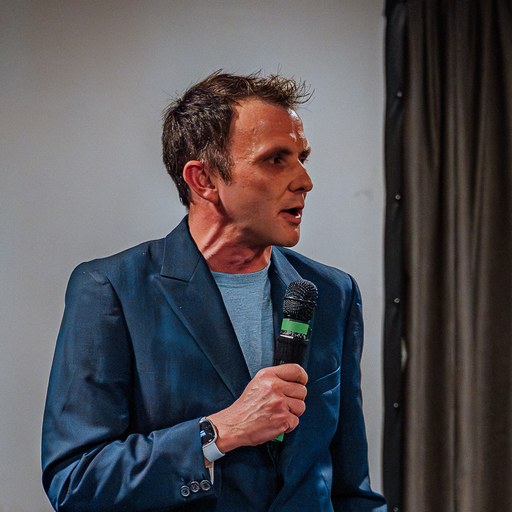
Did you know that only around 2% of URLs appear consistently across ChatGPT, Gemini, Google AI Search and Perplexity when you ask them the same thing?
Sit with that for a second. It essentially means we have four, five, six different lenses all looking at almost completely different internets. So what does that mean for you and your budget? Because you can't go and build four or five separate websites to resonate with each model. And each one of these big chatbots has huge search volumes, so ignoring them is not really an option either.
Do you pick one? Or do you try to create content that resonates across all of them? That question is exactly why we built the multi-format content strategy, and it is the practical end of everything we talk about in our guide to generative engine optimisation (GEO) .
Why your SEO content strategy now has to feed four different internets
The idea is dead simple. We want to get what is in your head, as a business owner or as the subject matter expert in your brand, and get it in front of your customers as fast as we possibly can.
Here's the thing. What is in my brain right now is useless information. Not because it's rubbish, but because it belongs to me and lives nowhere else. An AI is never going to read what's in my head, because no matter how much Elon Musk wants me to put a chip in there, it isn't happening.
So the whole job of an SEO content strategy in 2026 is a transport problem. How do we get your expertise out of your head and onto your website in a form the machines can actually read? If you ask us to write some copy for you, we'll do a great job of it. But we haven't got the personalised customer experience you've built up over years and years working in your particular niche. Nobody has that except you.
So we start with video.
Step one: long-form video as the source asset
We come up with a series of questions, make sure we've done the keyword research around them, then sit you in front of a camera and record what is essentially a long podcast. What you're watching in the video above is literally part of our own multi-format content strategy. We eat our own cooking.
That one long recording gives us the ability to do an enormous amount. A video content strategy built this way isn't about producing one polished thing and hoping. It's about producing one dense thing and cutting it eight different ways.
And no, it doesn't have to be video. It can be audio. If you've got a face for radio like mine, there are plenty of ways to do this. If you just love to write and want to sit there and write and write, that's absolutely fine too. There are ways for us to take that and turn it into different levels of content.
Step two: the transcript is the most important part of your digital content strategy
First and foremost, we take that recording and turn it into a transcript, then edit it for clarity. This matters because as things stand, large language models cannot read a video. Crawling video isn't efficient and LLM crawlers aren't going to be efficient at it for a good number of years yet.
The transcript is the machine-readable version of you. It's what lets us use your own words to craft social copy, to write service page copy with insight only you could give us, and to build a blog post with proper citations on it.
There's a second reason, and it's got nothing to do with robots. Different people consume content in completely different ways. I'm hugely video focused. I love watching videos and listening to audiobooks. I've got four kids, so I don't have the time to sit scrolling through endless walls of text. I need it to fit around my work-life balance and around doing the washing up. Someone else will happily sit and read for an hour.
Making sure you always have video, audio and text available means whichever format your customer actually prefers becomes an option. That doesn't just help from a generative engine optimisation perspective, it helps from a plain user experience perspective, and we leave no stone unturned on either.
Worth knowing: TikTok's own creative research found that simply having captions on a video lifted brand affinity by 95% and recall by 58% . When you're making ads or trying to get through to customers, recall is the thing you want more than anything. Videos and ads are absolutely everywhere now and, like it or not, you are competing in the attention economy. Every small step that improves things for your user counts.
That's why the transcript is one of the most fundamental building blocks of the whole system, and why it's so central to any serious digital content strategy.
Why generic AI content is quietly wrecking your blog content strategy
We start with long-form because we want what's in your head on your website. And this matters more since Google spent 2025 tightening up search quality, including an August 2025 spam update aimed squarely at scaled content abuse , which is the polite term for mass-produced, low-value pages. The web had filled up with AI slop and Google went after it.
Let me show you why that slop happens. Say I want to open a ballet studio. I go into ChatGPT and say: write me a web page about my ballet studio. Nothing else. That's it.
It has no context. No understanding of what type of ballet you teach, or where you're based, or who you are. But it desperately, desperately wants to give you an answer. So it prints out some absolutely generic dross pulled from its training data that reads identically to a few thousand other ballet studios.
Now say you actually performed for Northern Ballet. You toured the world. You danced with some of the best artists ever to grace a stage. You've taught a string of brilliant up-and-coming ballerinas. If we take that context from you, put it in a transcript and hand that to a large language model, the page suddenly becomes highly relevant to you and nobody else. If you've got a distinct tone of voice, we can use that to shape how your brand talks too. This is the difference between using AI as a shortcut and using it properly, which is a hill I will happily die on repeatedly .
All of it goes into producing quality content at scale. We know the tips and tricks that make it resonate with your audience while still following conversion rate optimisation tactics, so it's designed to actually do a job. Mix your 20 years of ballet expertise with the collective century-plus of digital marketing experience we've got at 21 Degrees, and you get content that works really, really well for your customers.
Proprietary data is your moat
Proprietary data is the stuff you own that nobody else does. Every brand is competing for the same attention, but there is information you have that literally nobody else in the world has.
Say you're a shoe retailer and you discover you sell more red shoes than any other colour in the world. That's yours. So when you publish "50% of our customers buy red shoes", that is genuinely useful to a chatbot, because it cannot get that anywhere else.
Big caveat: you can absolutely overstuff numbers. As models mature they will start wiping out useless data, and there is no point putting facts in for the sake of putting facts in. But real proprietary data becomes your moat. It's the thing that means a chatbot comes to you rather than anyone else.
We've seen this work at the sharp end. For Bud Financial , a proprietary-data-led campaign reached 69 C-suite banking executives at firms including HSBC, Goldman Sachs and Barclays, and returned 50 times ROI. That campaign worked because the data behind it existed nowhere else.
Reference everything, because Claude is checking
Any time we mention a stat or a survey, we reference it properly in Harvard style. This tells the models we've done our due diligence. Claude, for example, really likes peer-reviewed, paper-style content, because it wants to guarantee the accuracy of what it's saying. Our guide on how to use Claude Cowork covers the prompts we use to keep that referencing consistent.
Adding the link proves we didn't just assert the fact, we showed our working. To a human like you or me that isn't hugely important, because we mostly don't have time to check, and we assume what we're told is true. Which is exactly why AI hallucinations are such a problem. But if you consistently demonstrate your data is accurate, you're far more likely to get cited.
Step three: PR, because a mention now beats a link
SEO always had this element of chasing backlinks for domain authority. Then Ahrefs ran a study across 75,000 brands and found something genuinely uncomfortable for the link-building industry: total backlinks correlated with AI visibility at just 0.218, while branded web mentions came in at 0.664 , roughly three times stronger. The follow-up found YouTube mentions were stronger again at around 0.737 , the highest of any signal they measured.
Worth saying plainly: the Ahrefs team are clear that correlation isn't causation. Opening a YouTube channel does not magically summon citations. But the direction of travel is obvious enough to act on.
Why does this happen? Because an LLM can scan thousands of websites in minutes. Run a standard AI search and it will typically reference five to ten sites, having read all of those pages in seconds. Which means being mentioned on your own website is no longer enough. The model wants to see other trusted sources backing up what you say.
And that is where PR comes in. For the last ten years, PR has massively annoyed journalists by constantly asking for backlinks. What a journalist actually wants is a good story their readers care about. What you want is to be mentioned in it. Previously, if you didn't get the link, you'd go back and ask, and sour the contact. Now, the mention on its own is enough. Digital PR has quietly become one of the best AI visibility plays going , which is not a sentence I expected to write.
Step four: cut it into social clips, and do it fast
There are two reasons we cut everything into clips.
First: why on earth would you waste content that good? If we've got you on camera and there are wonderful little nuggets in there, we cut them into clips and send them to your audience. So as well as being mentioned on YouTube, you're on Instagram and LinkedIn too, and you're meeting people wherever they search. The user journey is completely broken compared to what it used to be. Huge numbers of people start on TikTok now, which is exactly the shift behind our TikTok-led work with Monty Miracle . If you've spent an hour talking to camera, you've got genuine value to give away for free.
Second: speed. Perplexity has the strongest recency bias of any major AI search engine , giving a measurable boost to content published or updated in the last 30 days, with freshness accounting for a large share of how it picks sources at all. That 30-day window means you should be pushing out something new roughly monthly to stay in the answer set. Social clips are how you hit that cadence without churning out filler.
And YouTube deserves its own note. It's one of the most cited domains across the major AI engines , and one of the biggest knowledge banks humanity has. Worth being precise about where that lands though: those citations concentrate in Google AI Overviews and Perplexity, while ChatGPT and Claude barely cite video at all , which is exactly why the transcript on your own site matters as much as the upload. So we use your words to help you appear more often inside the chatbots themselves.
What this looks like as a B2B content strategy
If you're in B2B, this system fits almost too neatly, because your buyers research obsessively and your sales cycles are long. A B2B content marketing strategy built on one expert recording gives you the definitional content that gets quoted, the proof points that get cited, and the clips that keep you visible between quarterly buying cycles.
The alternative is what most people do: publish a beige blog nobody reads, then wonder why ChatGPT recommends a competitor. You can see how we approach this across B2B marketing generally, and how the whole thing ladders into Outcome Marketing , which is our name for running brand and performance as one system rather than two arguing departments.
If you want to start tomorrow with no budget
Obviously the first thing I'd do is hire 21 Degrees. I would say that. But I understand you might need to free up budget first and want to start now.
So: go and grill ChatGPT or Gemini. Ask it whether it would recommend you for a particular prompt, and if it wouldn't, ask it why not. It will tell you all sorts of things and give you a genuine list of what to go and fix. If the acronyms are doing your head in, we've written up the difference between SEO, GEO, AEO and AIO in plain English.
Second: get comfortable with being uncomfortable. Recording videos like this is not easy. I go through a mini panic attack every single time I have to do one, and judging by the quality of my videos I've still got a long way to go. But the more you do it, the better they get.
Because the most important thing, no matter what, is getting what's in your brain out onto the internet. What's in your brain is exactly what ChatGPT, Grok, Perplexity and all these large language models want to hear from.
Work with a content strategy agency that builds for AI search
We're a Leeds-based content strategy agency running this system for brands who would rather be cited than ignored. Our generative engine optimisation services cover the whole pipeline: keyword research, the recorded interview, the transcript, schema, footnoted blog content, digital PR and the social clips that keep you fresh.
If you want content strategy services that produce something a machine will actually quote, rather than another beige blog nobody reads, let's talk . Or start with a free digital health check and we'll tell you where you currently stand.
Hire 21 Degrees, because we can do the whole thing for you.
Key quotes
We take what is potentially useless information in my brain. And it's useless because at the moment it belongs to just me.
An AI will never be able to read what's in my brain, because no matter how much Elon Musk wants me to put a chip in my head, it isn't going to happen.
Proprietary data becomes your moat. It becomes something that means a chatbot can come to you rather than anyone else.
Being mentioned in that article is enough.
Get comfortable with being uncomfortable, and start grilling ChatGPT for why it's not recommending you.
Sources
- Lee (2026). AI platform citation comparison: ChatGPT vs Perplexity vs Google AI Mode vs Claude . Study of 19,556 queries finding cross-platform cited-URL overlap of approximately 1.4%.
- TikTok Creative Center (2025). The power of creative elements in TikTok ads .
- RankRealm (2026). Google search recap: what changed in 2025 . On the August 2025 spam update targeting scaled content abuse.
- Ahrefs (2026). Branded mentions versus backlinks for AI visibility , the 75,000-brand study (branded web mentions 0.664 versus total backlinks 0.218). See also Machine Relations' summary .
- Ahrefs, reported by The Next Web (2026). Across 75,000 brands, YouTube mentions are the strongest signal of AI visibility .
- Everything-PR Research (2026). The 50 most cited websites in AI .
- AuthorityTech (2026). How Perplexity decides which sources to cite .
- 21 Degrees Digital (2026). Bud Financial campaign results: 69 C-suite banking executives reached, 50x ROI . Proprietary, first-party data from client reporting.
Frequently asked questions
-
What is a multi-format content strategy?
A multi-format content strategy takes one long-form recorded interview with a subject matter expert and turns it into several formats: a cleaned transcript, a blog post with citations, service page copy, social clips and a YouTube upload. The point is that each large language model pulls from different places, so one source asset is re-cut to suit all of them rather than making separate content for each.
-
Why start with long-form video rather than writing blog posts?
Because the expertise sits in the business owner's head, not in a writer's. An hour of someone talking about their own niche produces context, examples and opinions that generic copy cannot match. Everything else gets cut from that single dense recording, so the long recording is the cheapest way to produce a lot of genuinely original content.
-
Why does the transcript matter so much for AI search?
Large language models cannot watch a video. Crawling video is inefficient and will stay that way for some time, so the transcript is the machine-readable version of the recording. It is also what lets you serve video, audio and text to the same audience, which helps user experience as much as it helps generative engine optimisation.
-
What is proprietary data and why does it matter for AI visibility?
Proprietary data is information only your business holds, such as what your customers actually buy or how your accounts perform. A chatbot cannot get it anywhere else, which makes it the strongest reason for a model to cite you rather than a competitor. The caveat is not to stuff numbers in for the sake of it, because models are getting better at discarding filler data.
-
Do brand mentions matter more than backlinks for AI search?
On the available correlation data, yes. Ahrefs studied 75,000 brands and found branded web mentions correlated with AI visibility roughly three times more strongly than total backlinks, with YouTube mentions the strongest signal of all. The researchers are clear that correlation is not causation, but it does mean an unlinked mention in a news story now carries real weight.
-
How often should you publish new content for AI search?
Roughly every 30 days. Perplexity has the strongest recency bias of the major AI search engines and gives a measurable boost to content published or updated in the last month. Cutting a single long recording into social clips is the practical way to hit that cadence without generating filler.
More insights




Stay sharp on what works
No fluff. No clickbait. Just content that actually helps.