











What is generative engine optimization (GEO), and how do you win at it?
AI tools like ChatGPT, Claude and Gemini are changing search for good. Here's what generative engine optimization is, why SEO is not dead, and how to get your brand cited by AI.
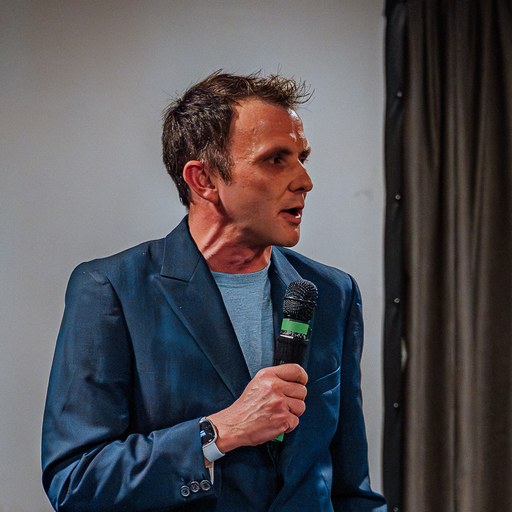
Today we are talking about generative engine optimization, or GEO. Everybody knows the standard blue links we are all used to in search. But the world is changing. Tools like ChatGPT, Claude and Gemini are completely changing the way we use search, and recently, for the first time, AI and bot traffic overtook the traffic generated by humans .
So what does that mean for you? What does it mean for your brand, and how do you succeed in this new world? In this series we are going to look at exactly how you turn this shift to your advantage, and turn it into profit.
Search has fundamentally changed
Load up any standard Google page these days and you will see the whole thing has changed. You now sit with an AI Overview at the top of the page. That has fundamentally changed how we understand search, because some surveys report that up to 60% of searches now end without a click at all .
So what is the point in optimizing your website? Look at the metrics we have all become comfortable with in SEO. A number one link historically earned you around 15% of the traffic. With an AI Overview in place, that drops to around 8% . But if you are in the AI Overview and you are also running paid ads, your conversion rate goes up, because you are being cited as a trusted source and offering the service right then and there.
This means we are no longer just thinking about search. We are thinking about brand, and about how to make you a trusted source in front of your customers. And demand for search itself has not fallen. Google's own Year in Search data shows conversational, "how do I" style questions hit an all-time high in 2025, up around 25% year on year . People are clicking less, but they are asking more, and asking in exactly the conversational way that feeds AI search. So the question becomes: how do you get your brand mentioned, and how do you get it trusted?
Is SEO dead? GEO vs SEO
The first place to start is GEO, generative engine optimization. And GEO is built off the back of search engine optimization. It is not an instead-of. It is built on the fundamentals of how we have always done SEO, and that is your first step.
To say SEO is dead is, frankly, laughable, because it is the basis of everything GEO is built from. Demand for search is higher than ever. In January, Google reported that it now handles more than five trillion searches a year (independent estimates put it closer to six trillion). Add ChatGPT, which previously held the largest market share, and Gemini vying for its own share, and you are comfortably past six trillion searches a year. The question is, how often is your brand appearing in any of that?
SEO is the building block, the fundamental, of how you tackle a GEO campaign. Making sure your website is efficient, and that all the information about you is there on the website, is insanely important. But any SEO worth their salt has been telling you for years that you also need traditional PR to earn backlinks. Now, citations matter more than ever. If your SEO team understands PR, your website stops being your single source of truth. Instead you have a plethora of websites all corroborating the same facts. It is no longer just about backlinks like it was in the late nineties and early 2000s. What matters is that AI can find the same information from multiple trusted sources, and that is what propels you further up the rankings.
What is generative engine optimization?
A lot of people ask me, what is generative engine optimization? It sounds like a confusing term, and we do love our acronyms in digital marketing, so is this just another fad? No. There is something fundamentally different here. Generative engine optimization is about being mentioned by ChatGPT, by Google, by Claude.
Here is why that matters. When someone researches something now, they will say, I am looking for a new set of furniture for my garden. They no longer have to land on one website, spend five minutes perusing, then move to another, scraping maybe three sources together. They can ask very specific questions about exactly what they need: sizes, styles, the lot. They go back and forth and iterate, and the large language model keeps feeding them links, sources and information to guide them.
By the time they have finished researching, they might have effectively drawn from 500 different web pages. If your product is the right answer for that garden furniture, you need to be a continual source of reference that keeps coming back, so that by the time they decide which chair or table to buy, you are the answer. Your product goes in the basket, and within a week they are sitting in the garden with a cocktail.
GEO vs AEO (answer engine optimization)
When I am asked whether there is a difference between AEO, answer engine optimization, and GEO, generative engine optimization, the truth is there is not a massive one. It is the same problem through a slightly different lens.
Generative engine optimization is more generic. It is about covering all the bases so you are regularly featured inside ChatGPT or Claude. Answer engine optimization comes at it from the angle of specific answers. It is more granular and niche, making sure that when somebody asks, what health insurance provider should I use, you are the one appearing in that specific search. The idea behind AEO is to cluster a lot of content around one particular problem. If you are very good at solving a specific problem for a customer, looking at it through an AEO lens is genuinely useful.
From a GEO perspective, though, the fundamentals of search engine optimization still need to be in place. You need a good, strong website. You need all the answers on that website. And you need third-party sources citing what you do.
Why niche brands can win in AI search
The key thing about being featured in an AI Overview or by ChatGPT is that you do not have to be the number one link for a broad subject. You can be far more niche. You could make a video, probably like this one, that does not pull insane view counts. Nobody needs hundreds of thousands of people looking at this ugly mug every day. But within it, you are answering very specific questions.
That is a huge opportunity. As a niche brand, or with a niche product, you can be referenced where a number one Google link in an industry like financial services or insurance was once impossible against the big banks. If you answer questions very specifically, you get a real boost. Granularity matters. We are all experts in something. There will be weird, unusual things you know more about than almost anyone on the planet, and that unique perspective is exactly what lets AI put you in front of the right people as the answer to their problem.
One thing I find fascinating: look at the AI Overview and there is only a 38% correlation between who traditionally ranks number one and who gets featured in the Overview itself . It is even lower in ChatGPT, and lower still in Perplexity, because every one of these AI search engines wants something different and weighs ranking factors differently.
Brand plus performance: the 91% multiplier
So why care? Because there is a serious boost in clicks when you are cited in an AI Overview. Brands that get cited inside an AI Overview earn around 35% more organic clicks, and if you back that with paid ads over the top, up to 91% more paid clicks . That comes from looking after your brand first, then following it up with performance marketing. It is something we hold dear at 21 Degrees, because we have seen it work. When HMCA, a UK health insurer, came to us with almost no online presence and Google Ads off the table, we built the brand first across LinkedIn, SEO and digital PR, YouTube and Connected TV. In the first month, Connected TV alone turned a £16,000 investment into £204,000, a 12.75 times return, and branded search volume rose 46% as that awareness compounded into intent. Branded search is exactly the kind of signal AI search leans on, so that brand work feeds your AI visibility too.
AI visibility tracking: you cannot improve what you cannot measure
When it comes to AI visibility tracking, there are a few ways to do it. The most important thing to accept first is that you cannot see what you cannot measure. That is the foundation stone of any GEO campaign: understanding how you are ranking and how you are appearing in search, your AI search visibility.
Google has been surprisingly slow to help here. They have only just released data inside GA4 to help us understand the traffic and clicks coming through. Before that, you had to add bits of code to your site and set Google Analytics up specifically for it.
There are also some very good AI visibility tools out there. They regularly prompt the different AI models and show you what you are appearing for on any given query. They are not cheap, often 500 to 1,500 pounds a month, so here is a base-level approach for small businesses and solopreneurs who cannot justify that yet.
Run your own AI visibility audit by hand. Load up ChatGPT on a free plan and start prompting it about whether your brand should appear. One thing I do regularly is ask, which digital marketing agency would you recommend in Leeds? Then I look at the list it brings back. If we are not on it, I ask specifically why not, and then I do the same in Claude and in Gemini. You quickly get a clear picture of what to improve on your website to get included, because if we are not in that recommended list of best agencies in Leeds, why would anyone trust us to do their GEO?
Search Engine Journal published a study last May that found 90% of brands have zero AI visibility . It looked at 177 brands across several verticals, including healthcare, so it is a snapshot rather than the whole market, but it shows the scale of the opportunity.
One more tip: reviews play a massive part in whether you are cited . If you have very few customer reviews on Trustpilot or Google Reviews, you will start to fall back. I have been preaching since the mid-noughties that reviews are fundamental to SEO, and that is another core building block of SEO that now filters straight into GEO.
Where to start
If you are staring down the barrel of a million marketing options, I get that it is confusing. But the one thing you cannot do is let inertia stop you from doing anything. It is far better to do it, and make sure you are appearing in large language models like ChatGPT, Claude and Gemini, than not do it at all. Start with your SEO fundamentals, get your website and your answers in order, build your citations and reviews, and measure where you stand. If you want to automate that measurement, our guide on how to use Claude Cowork shows you exactly how.
Work with a generative engine optimization agency
At 21 Degrees Digital we combine generative engine optimization services with performance marketing, so your brand gets cited by AI and converts the traffic that follows. Whether you need a full GEO and SEO strategy, AI search optimization services, or simply an AI visibility audit to see where you stand today, we can help.

Key quotes
To say SEO is dead is, frankly, laughable, because it is the basis of everything GEO is built from.
Citations matter more than ever. Your website stops being your single source of truth. Instead you have a plethora of websites all corroborating the same facts.
You cannot see what you cannot measure. That is the foundation stone of any GEO campaign.
You do not have to be the number one link for a broad subject. You can be far more niche.
Generative engine optimization is about being mentioned by ChatGPT, by Google, by Claude.
Rory Mason, CEO, 21 Degrees Digital
Sources
- HUMAN Security (2026). The 2026 State of AI Traffic and Cyberthreat Benchmark Report . See also NBC News coverage of Cloudflare data .
- SparkToro (2026). In 2026, Less Than One Third of Google Searches Still Send a Click .
- Pew Research Center (2025). Google Users Are Less Likely to Click on Links When an AI Summary Appears in the Results .
- Google (2025). Year in Search 2025 , "how do I" queries up around 25% year on year.
- Search Engine Land (2025). Google Now Sees More Than 5 Trillion Searches Per Year .
- Search Engine Journal (2026). Google AI Overview Citations From Top-Ranking Pages Drop Sharply (38% correlation, Ahrefs data).
- Search Engine Land (2026). Google AI Overviews Drive 61% Drop in Organic CTR, 68% in Paid (Seer Interactive: cited brands earn around 35% more organic and around 91% more paid clicks).
- Search Engine Journal (2026). 90% of Brands Have Zero AI Search Mentions (Victorious study, 177 brands).
- Position Digital (2026). 150+ AI SEO Statistics for 2026 (reviews and AI citation rates, Seer Interactive data).
- 21 Degrees Digital (2026). HMCA campaign performance : proprietary first-party client data (Connected TV month one: £16,000 invested, £204,000 returned, 12.75x ROAS; branded search +46%).
Frequently asked questions
-
What is generative engine optimization (GEO)?
Generative engine optimization is the practice of getting your brand mentioned and cited by generative AI tools like ChatGPT, Claude, Google's AI Overviews and Gemini. It builds on SEO fundamentals so that AI can find consistent, trustworthy information about you across your own site and third-party sources.
-
Is SEO dead now that we have AI search?
No. SEO is the foundation GEO is built on. Demand for search is higher than ever, with Google alone handling more than five trillion searches a year, and a strong, well-structured website with the answers on it is still the starting point for appearing in AI results.
-
What is the difference between GEO and AEO?
They solve the same problem through a slightly different lens. GEO is broader, covering all the bases so you are regularly featured across generative tools. AEO, answer engine optimization, is more granular, clustering content around one specific question so you are the answer to that query. Both rely on the same SEO fundamentals.
-
Can small or niche brands appear in AI search?
Yes, and often more easily than in traditional search. You do not need to rank number one for a broad term. If you answer very specific questions well, AI can cite you where competing against big brands on a head term would once have been impossible.
-
How do I track my AI visibility?
You cannot improve what you cannot measure. Google has started releasing AI traffic data in GA4, and paid AI visibility tools prompt the different models to show where you appear. On a budget, run your own audit by hand: ask ChatGPT, Claude and Gemini whether they would recommend your brand, and note what is missing.
-
How do reviews affect GEO?
Reviews play a significant part in whether AI cites you. If you have very few reviews on Trustpilot or Google, you tend to fall back. Reviews have long been a core SEO building block, and that signal now feeds straight into GEO.
More insights



Stay sharp on what works
No fluff. No clickbait. Just content that actually helps.