











Why do I need an SEO agency, in a world of AI?
SEO has been declared dead for twenty years. Rory Mason has spent that entire time doing it. So when someone asks why they should pay an agency when they have a ChatGPT subscription, here is the honest answer, including where the line sits.
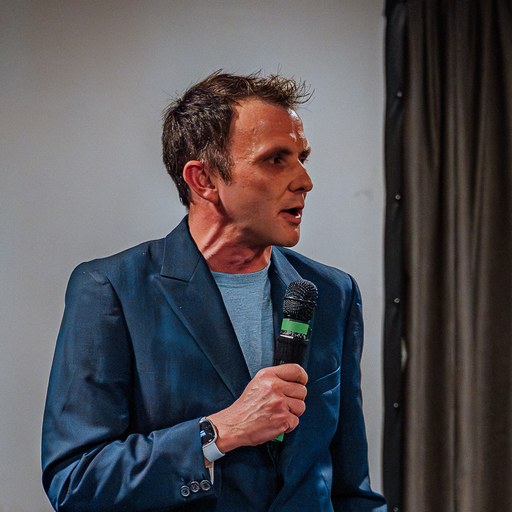
SEO has been dead for roughly twenty years, if you believe the internet. Our CEO has spent that entire time doing it. So when someone asks why they should pay an agency when they have a ChatGPT subscription, the honest answer is more interesting than "because we said so". Sometimes you genuinely do not need us. Here is where the line sits.
The short version. An SEO agency earns its money on three things a chat window cannot give you: the tool stack that sees what is actually happening on your site, the expertise to decide which fights are worth picking, and the human in the loop who catches the AI when it gets it wrong. If you can build those three things yourself, you do not need an agency. Most businesses can, in theory. Very few want to spend their week on it.
In Rory's words
SEO has been dead for as long as my SEO career has been going, which is spanning nearly 20 years now.
You buy our time, and you buy our expertise.
LLMs can be very much like a very obedient lapdog. They just want to give you an answer.
I'm just a guy that boringly talks about SEO over and over again.
Rory Mason, CEO, 21 Degrees Digital
SEO is not dead. It stopped being about blue links.
The old job was clear enough. Get to the top of Google, build some links, turn that into revenue. That job is disappearing, and anyone still selling it should worry.
The new job is broader and harder. SEO has become the glue that wraps around every other part of your marketing. Your paid ads underperform if the landing pages behind them are weak. Your PR earns coverage that does nothing if it points at pages with no strategy behind them. Your brand searches stay flat if nobody has given people a reason to type your name. None of that sits in a keyword ranking report, and all of it is SEO's problem now.
Which is why marketing run in silos fails. It is the thing we repeat in pitches until people are tired of hearing it, because it is the single most common reason a decent budget produces a poor return.
If you get your answers from ChatGPT, what is your plan to be in them?
Plenty of people tell us they have stopped clicking blue links. Good. So have we. The follow-up question is the one that matters: when one of your customers asks a chatbot for a recommendation in your category, what have you done to be the brand it names?
That mention has to come from somewhere. Usually it comes from two places at once. Digital PR , which earns you the corroboration that sits on other people's websites, and your own site being marked up properly so a machine can read what you do and where you do it. If you want people through a physical door, locational schema is not optional. If nothing on your site states the basics in a form a model can parse, you are hoping to be inferred into an answer rather than found in one.
We are doing exactly this to ourselves, publicly. We rebuilt our own site and tracked what the chatbots said about us before and afterwards , which is the other video in this series and worth watching alongside this one.
The junior employee problem
Here is a pattern that has frustrated Rory for his entire career: businesses hand their most valuable channels to their most junior people.
Social is the obvious example. Plenty of companies have their social run by someone eighteen months out of university. They know how Instagram works, which feels like a qualification. What they do not have is context: how your customers actually buy, what they worry about, where they spend their time. A social agency starts by digging into the audience, and the answer is often uncomfortable. Your buyers might not be on LinkedIn at all. They might be on Reddit. That is not a thing a junior marketer with a content calendar is likely to find.
Swap the junior marketer for a chat window and the problem is the same shape. ChatGPT will happily tell you that you are not ranking for "white t-shirt" and that you should do something about it. It will not tell you that you are never going to outrank Next and Dunelm for that term, and that the thousands you are about to spend chasing it would do more work almost anywhere else.
Knowing which fights to pick is the job. AI does the legwork brilliantly. Strategy still needs an expert human in the loop.
A ChatGPT subscription is not a tool stack
A model knows what it was trained on. If that training stopped six months ago, that is where its picture of the world ends. It can search the web to fill gaps, which helps, and that is the model using a tool rather than the model knowing something.
The gap between a chat window and an agency is mostly the tools hanging off it. We connect ours to Semrush, Ahrefs and Screaming Frog, so it can crawl your site properly, pull real data and tell us what is actually happening rather than what sounds plausible. Your marketing executive with a ChatGPT account will get some of the way. The same technology in the hands of someone with fifteen years of SEO behind them and a full stack of paid tools goes considerably further.
What you are actually buying
You buy our time and our expertise. That is the whole transaction, and AI has changed what a day of it is worth.
Rory gets more done in a day now than he could in a week two years ago. Applied properly, that means the day you buy stops producing one blog post and starts producing four, at the same quality. It also means the tedious parts stop eating the budget. He still remembers spending three hours writing up meeting notes after a client meeting early in his career. Somebody paid for those three hours. Nobody got any value from them.
Take that work off the table and what you are left with paying for is the thinking: digging into the data, testing more, spotting the pivot earlier and making it faster. We are not shy about using AI. We use it so that the hours you buy are spent on decisions rather than admin.
AI does the doing. Humans make the decisions.
That is the rule we run internally, and it exists because AI gets things wrong confidently.
Models hallucinate. They invent things. They behave like an obedient lapdog that desperately wants to hand you an answer, and a badly prompted one, or one starved of context, or one given so much context it loses the thread, will produce something that reads beautifully and is simply untrue. Without a human positioned to catch that, it reaches your website.
So: AI can write the blog post and pull the report together, and a human checks it before it goes anywhere near a client. Beyond that, we never let it decide. We ask it for options. We make it think through alternatives. We argue with it, and it is remarkable how often a model will concede the point once you push back properly. Let it run unchallenged and you find out where it was wrong much later, and much more expensively.
Would you know if it got it wrong?
This is the question underneath the whole debate. As long as the work sits inside your own expertise, you will catch the mistakes. The risk starts where it moves outside it.
Would you know whether your schema has been implemented correctly across the site? Whether your keywords are joined up or quietly competing with each other? Whether your internal linking is doing anything? Whether the publications on your PR list are the ones that will actually move you? SEO is a field with millions of pages of genuine disagreement in it. "It is fine, I have got AI" is a position that works right up until it does not.
When you genuinely do not need an SEO agency
An honest answer, because there is one.
If you can give an AI the right skills, meaning a real understanding of how each task should be performed, and connect it to the right tools, so it can crawl your site and pull from Semrush, Search Console and your ads data, and set it up so it reviews and checks its own work against a clear definition of good, then there is no reason you need us. That is a real configuration and it works.
The questions are whether that is your area of expertise, and whether it is the best use of your time. Take one building block: tone of voice. Point a general-purpose model at your blog with no tone of voice work behind it and you will publish generic drivel with nothing of your company in it. So one of the first things we do for any client is capture their brand's actual voice, then build that into the prompt as a reusable skill. Alongside it sit the skills for where keywords belong, and a natural language understanding pass that checks whether Google and the LLMs will actually understand the page.
Then the models change. There have been a lot of releases from Anthropic and OpenAI this year alone, and every one means going back through those skills to check they still hold. Do you have the time and the inclination to maintain that? If yes, run it yourself. If no, that maintenance is a large part of what an agency is for.
When SEO is not your first move
Would an SEO agency say every business needs an SEO agency? Not quite. Nearly every business would benefit from some form of it, but where it makes sense depends on turnover and stage.
Below a certain monthly budget, SEO struggles to produce a quick enough return, and paid ads will do more for you sooner. We will tell you honestly which side of that line you are on.
Even then, there is a case for spending a little time getting the basics in place, so that when the budget grows you are building on foundations rather than starting cold. The sooner you start, the sooner it returns. Leave it, and you get steadily more dependent on paid ads, and that paid budget has to keep growing to stand still.
Some sectors do not get the choice. Financial services, medical and other regulated categories often cannot run paid ads for their products at all. We work in those categories regularly, and for them investing early in SEO is the route to being found rather than one option among several.
Find out if you actually need us
We offer a free digital marketing audit covering SEO, paid media and GEO. We sit down, work out who you are as a brand, and tell you where your budget is best spent. Sometimes that answer is not us.
It is also a fair way to find out whether we know what we are talking about. We think we do. You have no reason to take our word for it yet.
Book your free digital marketing audit and we will tell you where your budget is best spent, even if that turns out not to be us.
Frequently asked questions
-
Is SEO dead?
No. It has been declared dead for about twenty years and keeps not dying. What has changed is the job: less chasing blue links, more making sure your brand is understood, corroborated and recommended across search and AI answers alike.
-
Can I do SEO with ChatGPT instead of an agency?
Partly, and genuinely so. A model with the right skills, the right tool connections and a self-review process can do real SEO work. What it will not do on its own is set strategy, pick winnable battles or catch its own confident mistakes.
-
What does an SEO agency do that AI cannot?
Three things. It sees your site through paid tools like Semrush, Ahrefs and Screaming Frog rather than through a chat window. It decides which opportunities are worth your budget. And it keeps a human accountable for everything that goes live.
-
Do I need SEO if my customers use ChatGPT?
More than before. Being named in an AI answer depends on digital PR, corroboration from other websites and your own site being marked up so a machine can read it. All of that is SEO work.
-
How much should I spend on SEO?
It depends on turnover and stage. Below a certain monthly budget, paid ads will usually return faster, and we would rather tell you that than take the money. Above it, SEO compounds in a way paid never does.
-
Does an SEO agency need an SEO agency?
You would hope not. We do our own, publicly, and publish what happens.
Stay sharp on what works
No fluff. No clickbait. Just content that actually helps.