










Proof of how AI can increase LLM optimisation
A month before we relaunched, our own website was a mess. We rebuilt it from the ground up, then asked ChatGPT the same questions again. Here are the seven rules that changed the answer.
A month before we relaunched, our own website was a mess. The technical SEO was full of holes. The content had not been touched in about five years. Our PR was earning links to pages that did nothing with them. Every habit we tell clients to break, we had. So we knocked the site down and built it again from the ground up, then went back and asked ChatGPT the same questions we had asked before.
The answers were different. Not slightly. Completely.
The short version. Five things moved how large language models talk about us: fixing the technical foundations, building a page for every question a buyer actually asks a chatbot, answering the obvious objection on the page itself, backing every claim with evidence a model can quote, and refusing to publish filler. Below is each one, what it did for us, and how to apply it to your site.
In Rory's words
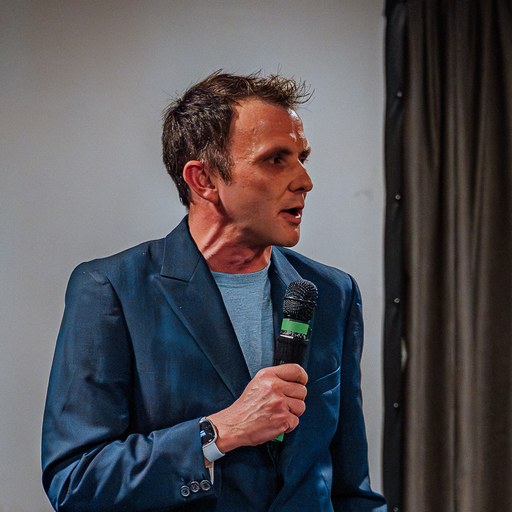
As a digital marketing agency, one month ago, our website was atrocious. And I don't just mean bad, I mean really, really, really bad.
We now know that the chatbots are on our side, because they're referencing content that we have put on the website.
The best content out there is something that you can provide to your customers that no one else can. That's how you win this game.
Inertia leads to inertia.
Rory Mason, CEO, 21 Degrees Digital
What changed after the rebuild
Before the relaunch, no large language model had ever crawled our site. Within a fortnight of going live we had leads coming in from ChatGPT. Lead volume from the site as a whole went up sharply too.
The bigger shift was in what the models said. Ask ChatGPT last year who the best SEO company in Leeds was and we were not in the list. Ask whether it would recommend us and you would get a hedge: we were in the mix, but bigger and more established names were a safer bet. A week after launch, we were in the list for the first time, and the model read our own new content back to us as the reason.
Rule one: fix the technical foundations before anything else
A chatbot cannot cite a page it cannot reach. Broken links, redirect loops, slow templates and thin pages all cost you, and they cost you before a single word of your content gets read. Our old site had the full set.
This is the least glamorous part of generative engine optimisation and the part most brands skip. It is also the reason a lot of GEO work quietly fails. You can write the best answer on the internet and still be invisible if the crawl gives up halfway round your site.
Rule two: build a page for every question a buyer asks a chatbot
In August 2025, Rory asked ChatGPT whether it would recommend 21 Degrees as a generative engine optimisation company. It said no. The reason it gave was specific and fair: the site barely mentioned GEO. A couple of blog posts, nothing else.
So he built a GEO page. Two days later he asked again and the answer had softened. We definitely did the work, said the model, but it did not look joined up, and there were no case studies behind it. One page moved the answer. One page did not win the answer.
That is the practical rule. Work out the questions your buyers type into a chatbot, in the words they actually use, then give each one a page that answers it properly. "Best SEO company in Leeds" is a real query with real revenue behind it. If nothing on your site answers it, you are relying on the model to infer you into the shortlist.
Rule three: answer the objection on the page before the model raises it
This is the part worth stealing.
A week after launch, Rory asked ChatGPT what it would say about us. It read back big chunks of the new content, then added a warning: 21 Degrees offer a lot of different services, so check they are not operating in silos, because if you want PPC and SEO you do not want two departments working separately.
A fair concern, and one we had already written a page about. So he asked whether we addressed it anywhere. The model found the page, changed position, and recommended us.
Models surface doubts. If the answer to the doubt is on your site in plain language, the model will use it, and the objection turns into a reason to pick you. Write down the three things a sceptical buyer would worry about before signing, then publish the honest answer to each. That is the most valuable page most brands never write.
Rule four: give models evidence, not adjectives
Every negative in those early answers was an evidence gap. No case studies. No stats. Nothing to quote. Models are quoting machines, so give them something quotable: named results, real figures, dated case studies, methods explained properly.
Being read and being recommended are different things. Semrush and Kevin Indig looked at thousands of domain appearances across AI search engines and found around six in ten citations never name the brand in the answer at all . Your page can be the source and your name can still be missing. Evidence with your name attached to it is what closes that gap.
Rule five: quality over volume, every time
Content is the easiest thing in the world to make now. Ask a chatbot for a blog about ballet and you will have something generic in seconds. Which is exactly why volume has stopped working.
In January 2025 Google rewrote the section of its Search Quality Rater Guidelines that deals with low-effort pages, adding scaled content abuse and a catch-all for main content made with little effort, originality or added value . The test it set out is not whether a machine wrote the page. It is whether the page took any effort and adds anything. A page written entirely by AI can score well, and a thin page written by a human scores badly .
Rory's position on this is blunt: if you publish a thousand pages in a day, nobody has read them, and it is content for content's sake. Use AI to research, to draft, to hold your tone of voice, to see what competitors are doing. Then put a human in front of it before it goes live.
Rule six: make your site, your content and your PR tell one story
Our old PR was good work pointing at the wrong pages. That happens when content, SEO and PR are planned separately, and it wastes most of the value.
GEO works when everything is singing off the same hymn sheet. The same claims, the same language, the same evidence, on your site and in the coverage about you. Models build a picture of your brand from all of it at once, so a site that says one thing and coverage that says another gives them a reason to hedge. Which is precisely what ours used to do.
Rule seven: measure your AI visibility, or you are guessing
You can do all of this in-house. Rory says so on camera and he means it. What you cannot do cheaply is see whether it is working. Search Console will not tell you which chatbots mention you or what they say. That takes a stack of paid tools, and a serious SEO and AI citation stack runs into several hundred pounds a month per tool before anyone has looked at the data.
We mix Search Console data with Ahrefs data in our own in-house tooling to work out where citations are coming from and which pages earn them. If you are building this yourself, the minimum useful version is a fixed list of buyer questions, run monthly across ChatGPT, Gemini, Claude and Perplexity, with the answers logged. Unglamorous, but it turns GEO from a hunch into a number you can move.
What it costs you to wait
Buyers arrive with a shortlist. Bain and Google surveyed more than 1,200 B2B buyers and found most have vendors in mind before they research anything, and nine in ten buy from that day-one list . Miss the list, and you are competing for what is left.
That list is now being written inside chat windows. G2 surveyed 1,076 B2B software buyers in March 2026 and found half of them start research in an AI chatbot more often than in Google, up from under a third a year earlier . The same research found buyers think more highly of a vendor when a chatbot names it in a recommendation.
Rory's prediction, recorded in July 2026 and on the record: by the end of the year, the standard blue links will be gone and search will happen almost entirely in a chat window. You are welcome to throw that back at him if he is wrong. The point underneath it holds either way. Every quarter you do nothing, the brands that are in the answer get further in front, and there is no scaremongering needed to see it.
Want to be in the answer?
We are an SEO and GEO agency in Leeds, and we have just run this experiment on our own website rather than someone else's. If you want to know where your holes are, our generative engine optimisation services start with a look at what the models currently say about you, which is usually the uncomfortable part.
We will not sell you something you do not need. You care about what goes out of the bank account and what comes back in. So do we.
Talk to us about GEO and we will show you what the models say about you today.
References
- Semrush and Indig, K. (2026) The ghost citations study . Accessed 7 September 2026.
- Search Engine Land (2026) Google quality raters now assess whether content is AI-generated . Accessed 7 September 2026.
- Semrush (2025) Google expands rules on low-value content . Accessed 7 September 2026.
- Bain & Company and Google (2022) What B2Bs need to know about their buyers , Harvard Business Review, September. Accessed 7 September 2026.
- G2 (2026) The Answer Economy: how AI search is rewiring B2B software buying , April. Accessed 7 September 2026.
Frequently asked questions
-
What is generative engine optimisation?
Generative engine optimisation, or GEO, is the work of getting your brand cited and recommended inside AI answers from tools like ChatGPT, Gemini, Claude and Perplexity. It sits on top of SEO rather than replacing it, because most models still reach your pages through search infrastructure.
-
Can I do GEO in-house?
Yes. All of it. It comes down to budget, time and the tools you are willing to pay for. The common failure is asking one junior marketer to rebuild the site, film the video, run the social, write the content and read the data. Agencies help most where the tool costs and the pattern recognition are, not because the work is secret.
-
How long does it take to show up in ChatGPT?
For us, a week from launch to appearing in answers where we had never appeared before, and a fortnight to leads. That was a full rebuild on an existing domain rather than a new site, and your mileage will vary with your technical starting point and how much coverage already exists about your brand.
-
Does GEO replace SEO?
No. Technical SEO is the foundation the whole thing sits on. If a crawler cannot get round your site, the model has nothing to cite.
-
Will using AI to write content get me penalised?
Not by itself. Google's rater guidelines judge effort, originality and added value rather than authorship. Mass-produced pages with nothing new in them are the problem, whoever or whatever wrote them.
-
What is the single highest-value page I can write for AI visibility?
The one that answers the objection a buyer would raise about you. That is the page that changed ChatGPT's recommendation of us.
Stay sharp on what works
No fluff. No clickbait. Just content that actually helps.