











Why ChatGPT, Claude, Gemini and Perplexity give you different answers
Only around one in ten domains cited by ChatGPT also gets cited by Perplexity. Rory Mason breaks down how each of the four big models decides what to cite, and what that means for getting your brand in front of all of them without building four websites.
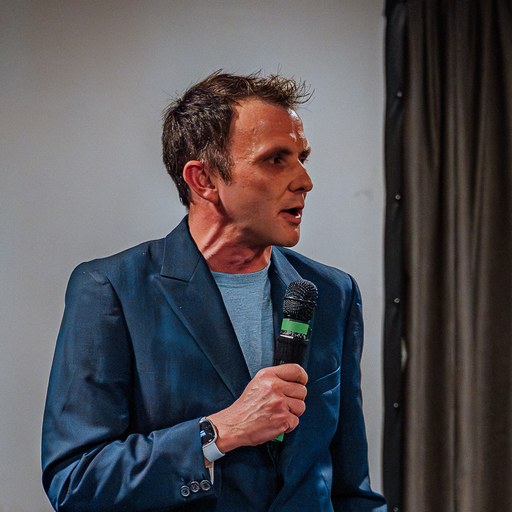
Ever wondered why different chatbots give you different answers? Ask Claude something, then put the exact same prompt into ChatGPT, and you will often get two completely different responses. That is because they are each built on their own understanding of the internet, with their own algorithms deciding what to surface. In this piece I want to walk through why that happens, and what it means for getting your brand cited in each one.
How ChatGPT chooses its sources
Start with ChatGPT. The most important thing to remember is that it is indexed off Bing, not Google . So if you have only submitted your sitemap to Google Search Console and never touched Bing Webmaster Tools, you are missing a massive trick, because ChatGPT leans on the Microsoft model of ranking the internet.
The next thing is that ChatGPT values third-party sources over what you say about yourself. If it can find you on your own website, fine, but it wants other sources backing you up. It leans heavily on Wikipedia: one analysis found Wikipedia made up nearly half of ChatGPT's most-cited sources . That share moves around a lot as new models ship, but Wikipedia remains a trusted source.
It also loves industry directories: trusted directories within your sector, the way Yell ranks companies, get leaned on heavily. In fact, close to half of ChatGPT's citations have been found to come from third-party sites like directories and listings . This is the heart of chatgpt seo, and it matters because if your website is indexed by Google but has no third-party data pointing to it and backing it up, you are unlikely to be recommended by ChatGPT.
This is important for every LLM. I have talked before about why PR matters so much : you need someone else corroborating what you say. If it is only on your website, in isolation, and written nowhere else, AI cannot trust it as much, and AI can check thousands of websites in minutes to see whether what you are saying is true. So the main directories in your industry become an incredibly important part of appearing in ChatGPT.
How Claude chooses its sources
Then there is the researcher of the group, Claude, and my personal favourite. Claude has the deepest engagement of any major AI app, with the highest time per user at around 35 minutes . Think of Claude as a scientist: it values highly cited, evidence-based, deep research.
This is where knowledge that exists only in your head needs to be on your website, because proprietary data that only you own is incredibly valuable to Claude. It goes deep trying to understand who you are as a brand, why you operate and what you are trying to achieve. Tick those boxes and back your data with evidence, and it will cite you more and more.
Think of it as a research fellow. If you have ever done a PhD or a dissertation, Claude really likes Harvard referencing and understanding where a source came from. It will drill through and go the extra length to check that what you are saying is right, because it wants to give its users highly intelligent, structured information. Do that on your website and you will win.
How Gemini chooses its sources
Now Gemini, which is an interesting one. We all Google things, and Google has effectively got the entire market of indexing the internet, so is it any surprise that Gemini derives most of its information from your own website? The Yext study of 6.8 million citations found that just over half, 52%, of Gemini citations came from a brand's own website .
That is powerful, because it means Gemini is currently the most malleable model in terms of influencing what it says about you in a user's chat. If you sort out your own website and make sure all your information is on it, you are most of the way there.
It also means that if you offer a very specific product or service that is not on your website, you have almost no chance of being recommended by any of the LLMs. But if you take the time to download the vast quantities of information sitting in the heads of your employees and business owners onto your website, you go a huge way towards Gemini recommending you. It does not surprise me that Google trusts this, having more experience than any AI company at what quality content looks like. A real key here is following SEO best practice: technical guidelines, good user experience, structured data and schema markup all feed into Gemini.
How Perplexity chooses its sources
Then Perplexity, which I think of as the teenager of the LLMs, because it loves social media content and, above all, new content. There is a strong recency boost for being cited in Perplexity when you have released content in the last 30 days .
It loves Reddit. Around 24% of Perplexity's citations have been found to come from Reddit . And YouTube is big too: one analysis found YouTube makes up about 32% of the social-media links cited in AI search .
So what does this mean for you? You have to be regularly creating new content. If you are waiting to write a blog post every six months, you will not feature much. Do you have a Reddit strategy, given how often Reddit links appear? And are you releasing new informational videos regularly? Do all three and you are far more likely to appear in Perplexity. Stop, and your chances dip over time. A continual strategy across Reddit, YouTube and fresh content is becoming more and more important if ranking in Perplexity matters to you.
Do you need four versions of your website?
By this point you might be thinking: do I now have to create four versions of my website, and adapt every piece of content to tick every box? The truth is the internet is huge, and there are very few times you will be cited across every one of these models every time. There is so little overlap between them that only around one in ten domains cited by ChatGPT also gets cited by Perplexity .
So what do you do as a marketer or business owner? You make content that is valuable for your audience, not for search engines. Then you do the audience research to find out where your customers actually are and what they are most likely using, and you optimise more for that. This is the real answer to the GEO vs SEO question: it is not one or the other, it is making genuinely useful content and putting it where your audience looks.
The multi-format content model
We have another video on our website and YouTube about our multi-format content model , which is exactly what we are doing right now. We download the information sitting in my head, record a video, transcribe it, get it on the blog, and cut it into social clips. From this one video, we get tonnes of content, blog posts, and a way to demonstrate that we know what we are talking about.
We do this regularly, which means Perplexity picks up that we release new videos, content and blogs every week and put them on YouTube. The transcript is tidied and optimised so LLMs can read it. We turn it into a blog post that embeds the YouTube video and sits on our website, which is great for Google. We make sure every stat I quote is linked to its source, so we are corroborating everything we say. We add the citations, we add frequently asked questions, and we tick every box we can across all these models.
Does that guarantee this content sits across every LLM and chatbot? Not at all. But it is a really good way of adapting content for all sorts of methods. A social post with a tiny bit of interesting insight might do really well on Instagram or Perplexity. Claude might cite the full blog post. Google might feature some of it in AI Overviews, which has already happened to us. It is all about making content valuable for your audience, in different formats they can actually use, and, as with Gemini, getting what is in someone's head onto the website in the quickest possible way.
Work with a generative engine optimization agency
Getting cited across ChatGPT, Claude, Gemini and Perplexity takes a different play for each one. At 21 Degrees Digital we combine generative engine optimization services with performance marketing : technical SEO and schema for Gemini, digital PR and directories for ChatGPT, a recency and Reddit strategy for Perplexity, and the proprietary, evidence-backed content Claude rewards. Whether you want a full GEO strategy, chatgpt seo, or AI search optimization services, we can help.
Book a GEO audit and we will tell you which of the four models is already recommending you, and which one is recommending someone else.
Key quotes
Ask Claude something, then put the same prompt into ChatGPT, and you will often get two completely different answers.
ChatGPT is indexed off Bing, not Google.
Proprietary data that only you own is incredibly valuable to Claude.
Gemini is currently the most malleable model in terms of influencing what it says about you.
Make content that is valuable for your audience, not for search engines.
Sources
- Kime (2026). ChatGPT citation sources decoded: what actually gets cited in 2026 . On ChatGPT pulling primarily from Bing's index.
- Profound (2025). AI platform citation patterns . Wikipedia accounts for approximately 47.9% of ChatGPT's top-10 most-cited sources.
- Yext (2025). AI visibility in 2025: how Gemini, ChatGPT and Perplexity cite brands . 48.73% of ChatGPT citations came from third-party sites such as directories and listings.
- Apptopia (2026). Gen AI chatbots data brief . Claude's per-user engagement leads the major chatbot apps, with independent trackers putting its average session near 35 minutes.
- Yext (2025). AI visibility in 2025 , the 6.8 million-citation study. 52.15% of Gemini citations came from brand-owned websites.
- AuthorityTech (2026). How Perplexity decides which sources to cite . Perplexity gives a measurable boost to content published or updated within the last 30 days.
- PikaSEO (2026). YouTube overtakes Reddit as the number one social source for AI citations . 24% of Perplexity citations in January 2026 came from Reddit.
- Otterly AI (2026). YouTube AI citation study 2026 . YouTube represented 31.8% of social-media citations across AI search.
- 5W (2026). The 5W citation source audit, Q1 2026 . Only approximately 11% of domains are cited by both ChatGPT and Perplexity.
- 21 Degrees Digital (2026). First-party record: a Google AI Overview for the query "multi format content strategy" cited 21 Degrees Digital among its eight sources, listing The multi-format content strategy: one recording, four LLMs and attributing its "start with an anchor asset" guidance to 21 Degrees Digital. Observed 28 July 2026; screenshot held on file.
Frequently asked questions
-
Why do ChatGPT, Claude, Gemini and Perplexity give different answers?
Because each is built on its own understanding of the internet and its own ranking algorithms, and they pull from different sources. ChatGPT leans on Bing, directories and Wikipedia; Gemini on brand-owned websites; Perplexity on recent content, Reddit and YouTube; and Claude on deep, well-cited, evidence-backed material.
-
Why does ChatGPT not show my website?
ChatGPT is indexed off Bing, not Google, and it favours third-party sources that back you up. If you have only submitted your sitemap to Google Search Console, add Bing Webmaster Tools, and make sure trusted industry directories and other sources cite you, not just your own site.
-
How do I get cited by Claude?
Treat Claude like a scientist. Put the knowledge that only exists in your team's heads onto your website, back every claim with evidence and clear sourcing, and structure it well. Claude rewards proprietary data, deep research and clear referencing.
-
How do I get cited by Gemini?
Gemini pulls just over half of its citations from brand-owned websites, so get all your information onto your own site, follow SEO best practice, and use structured data and schema. If a product or service is not on your website, Gemini cannot recommend it.
-
How do I get cited by Perplexity?
Perplexity favours fresh content, with a boost for anything published or updated in the last 30 days, and it leans heavily on Reddit and YouTube. Publish regularly, build a genuine Reddit presence, and release informational videos.
-
Do I need a different strategy for each AI model?
To an extent, yes, because there is very little overlap between what each model cites. But the practical answer is to make genuinely valuable content for your audience, research which platforms they use, and adapt it into multiple formats rather than chasing every model at once.
Stay sharp on what works
No fluff. No clickbait. Just content that actually helps.