








What Valentine’s Day spending says about how we show love in the UK (and how brands should respond)
Valentine’s Day used to be simple: flowers, a card, dinner out, maybe something sparkly if you were brave (or guilty). But in the UK right now, how we communicate love through spending is evolving, be

Love is still the message. The medium is changing.
Valentine’s Day used to be simple: flowers, a card, dinner out, maybe something sparkly if you were brave (or guilty). But in the UK right now, how we communicate love through spending is evolving, because the economy is evolving, digital behaviour is evolving, and frankly… expectations are evolving.
Valentine’s isn’t just a retail moment. It’s a cultural mirror: a snapshot of what we value, what we can afford, and how we want to be seen.
So what does the data say the UK is actually doing, and what should marketers do with it?
1) The biggest “gesture” in 2024–2025 might be… keeping it realistic
In post-Valentine’s research, YouGov found 51% of Britons didn’t celebrate Valentine’s Day in 2024. For those who did, the standout pattern wasn’t extravagance, it was low-key. 21% spent the evening in with a homemade meal, while only 6% dined out (and 6% chose takeaway).
That’s not “romance is dead.” That’s “romance is adapting.”
And when spending is pressured, meaning shifts: love becomes consideration, effort, time, practicality, not just price.
Marketing implication: If your creative still assumes “big night out + big gift,” you may be talking to a shrinking slice of the market. Position around small meaningful moments and affordable upgrades.
2) Cards still win because they’re symbolic, not financial
When it comes to gifts, tradition hasn’t disappeared, it’s just been edited.
YouGov’s Valentine’s Day planning research found the top gift intentions were:
• Greeting cards (57%)
• Food/drink (30%)
• Flowers (29%)
And their post-event survey echoes similar top items actually exchanged (cards, chocolates, flowers).
Cards are fascinating because they’re not about luxury, they’re about proof. A card says: I stopped, I thought, I wrote, I chose you. In a high-cost world, symbolism becomes the value.
Marketing implication: Don’t just sell the product, sell the meaning. Product pages, ad copy, email subject lines: translate “what it is” into “what it says.”
3) “Dine-in romance” is the modern British love language
NielsenIQ reported £962m spent across Valentine’s Day on food and gifting, with strong performance in:
• Cut flowers: £100m (+6.6%)
• Fresh ready meals: £137m (+2.9%)
• Toiletries gift packs: £5.8m (+27%)
• Fragrances: £19m (+11%)
This matters because it points to a behaviour shift: people want something that feels like an occasion without the cost (or hassle) of going out.
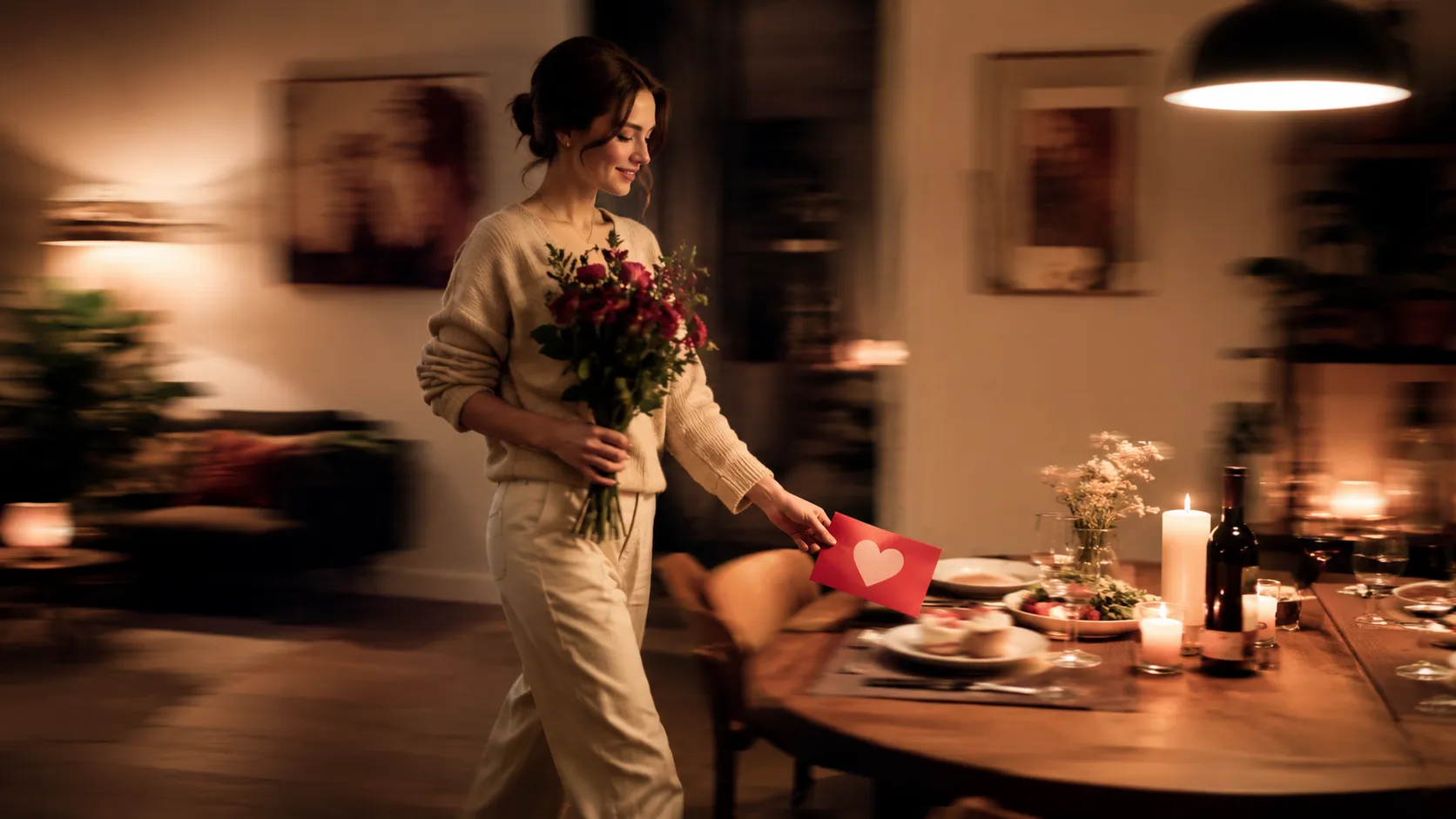
The “gesture” becomes: I curated an experience at home.
Marketing implication: Bundle thinking wins.
• “Valentine’s night in” bundles
• “Date-night in a box” landing pages
• Add-ons that move baskets: dessert, candles, playlist, table décor, handwritten note prompts
4) The economy shapes the gesture, even when we don’t admit it!
YouGov also found why people spent less: 49% said they mutually agreed to save money, 28% said they didn’t have as much money, and 15% said prices were up so they couldn’t afford what they wanted.
That’s the subtext of modern gifting: people aren’t only choosing gifts, they’re choosing trade-offs.
This is why “thoughtful” is beating “flashy” in brand messaging: it lets customers feel emotionally generous without financial guilt.
Marketing implication: Make “value” feel romantic, not cheap.
• Reframe offers as smart, considerate, intentional
• Use copy like “small upgrade, big feeling” or “make Tuesday feel like Valentine’s”
5) Digital didn’t replace physical, UK shoppers are hybrid by default
Online is still structurally huge in the UK. ONS data shows internet sales were 27.4% of total retail sales in 2025 (vs 19.2% in 2019).
But Valentine’s is uniquely “last-minute” and “emotion-driven,” which often pushes people to:
• browse online for ideas
• then buy wherever is fastest, easiest, and most certain
Even YouGov’s inspiration data highlights how people get ideas:
• In-store advertising (25%)
• Friends/family (22%)
• Google (15%) …and social varies sharply by gender and age (e.g., women using Instagram more; Gen Z using TikTok more).
Marketing implication: Treat Valentine’s like a multi-touch journey:
• Discovery: TikTok/Instagram/Google
• Validation: reviews, UGC, social proof
• Conversion: fast checkout, delivery clarity, local availability, click & collect
6) Valentine’s marketing is really “meaning marketing”
Here’s the part most brands miss: your customer isn’t buying a product. They’re buying a message.
A bouquet can mean:
• “I’m romantic”
• “I’m sorry”
• “I remembered”
• “I still choose you”
• “I want you to post this” (let’s be honest)
That’s why the same three categories (cards, flowers, food) keep returning. They’re not just products; they’re language.
So the question becomes: what “sentence” is your brand helping customers say?
Marketing implication: Build campaigns by intent, not demographics.
• “New relationship” (high anxiety, wants ‘safe’ options)
• “Long-term partner” (wants personalisation)
• “Low budget, high meaning”
• “Last-minute panic”
• “Self-gifting / solo Valentine’s”
What 21 Degrees Digital would do with this (practical playbook)
1) Build a Valentine’s landing page that ranks and converts
Include sections targeting search intent:
• “Valentine’s gifts under £X”
• “Next day / same day gifts”
• “Valentine’s date night at home”
• “Personalised gifts”
• “Gifts for him / her / them”
• FAQs: delivery cut-offs, returns, “what if I’m late?”
2) Run creative by “gesture type”
• Small everyday acts (copy-led, emotive)
• Experience bundles (AOV-led)
• Premium hero products (margin-led)
• Last-minute urgency (conversion-led)
3) Use proof as persuasion
Valentine’s purchases are high-emotion, high-risk (“Will they like it?”).
• Reviews near CTA
• UGC gallery
• “Most gifted” / “Best for…” badges
• Short quizzes: “What kind of Valentine are you?”
4) Treat the final 72 hours like a different campaign
Shift messaging from “romance” to “rescue”:
• delivery cut-offs
• local availability
• click & collect
• digital gift cards
• “still arrives in time” reassurance
Our Closing thought: love hasn’t got cheaper… just more honest
The UK’s Valentine’s trends don’t scream “people care less.”
They suggest something more interesting: people still want to show love, but they’re doing it in a way that fits real life budget, stress, time, and modern relationships.
In 2026 Britain, the biggest flex might not be spending more.
It might be paying attention.
By Zac Evans, hopeless romantic and Director At 21 Degrees Digital
More insights
-
 Industry News · 5 min read
Sky's buying ITV. Here's what it means for finance and insurance brands in a PPC world.
Read more -
 Industry News · 14 min read
Outcome Marketing: Why Performance and Brand Only Work Together
Read more -
 AI · 21 min read
How to Use Claude Cowork: The Complete Guide for Marketers
Read more

Stay sharp on what works
No fluff. No clickbait. Just content that actually helps.