











Outcome Marketing: Why Performance and Brand Only Work Together
Marketing has been carved into silos. Performance over here, brand over there, activation somewhere down the hall, often split by department across PPC, SEO and CRO. The result is that nobody is looki
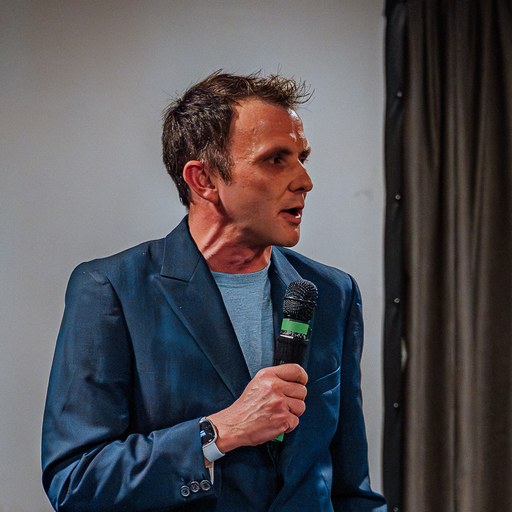
Marketing has been carved into silos. Performance over here, brand over there, activation somewhere down the hall, often split by department across PPC, SEO and CRO. The result is that nobody is looking at the whole picture any more. At 21 Degrees we built a different approach, and we call it outcome marketing. In this interview, founder and CEO Rory Mason explains what outcome marketing is, why performance marketing on its own always plateaus, and the only two numbers a business owner should really care about.
What is outcome marketing?
Outcome marketing is our way of putting performance marketing and brand marketing back together, instead of treating them as two separate jobs done by two separate teams. Some people call it outcome based marketing. The principle is simple: you should not be buying a service like PPC, SEO, social or content. You should be buying a commercial outcome.
That outcome might be more turnover, more enquiries, lower stock levels because you need to shift product, or a stronger, more visible brand. You come to us with the problem, and we help you solve it. Everything underneath it, the channels, the tactics, the clever stuff, exists to serve that one result. And it all keeps boiling down to two questions: how much are you investing, and what are you getting back?
What is performance marketing?
Performance marketing is, very simply, marketing on steroids. Most of the time you are looking at this through PPC. You spend a clear amount, and you expect a clear return. If you are going to spend £10,000 a month on advertising, you want at least a five times return, ideally ten. That means we would judge the success of that £10,000 on whether it generated £50,000 to £100,000 in revenue. That is performance marketing: squeezing every last penny out of the budget you spend, whether that is in ad spend or agency fees.
Accountants love it, because there is a set budget and a predictable return. The problem is the curve. Performance marketing starts on an accelerated climb, then it plateaus, then it dips. There is only a finite number of customers actively searching for what you do at any one time. A good performance marketing agency uses strategies, paid search, retargeting and the rest, to generate the results you need. But you cannot just keep pouring money into performance if you are not also adding new customers and building awareness. Once the active buyers are exhausted, performance stops working. That is where brand comes in.
How do you measure marketing performance?
The first thing you need to do is get your tracking right. We have worked with some seriously big brands that had their tracking completely wrong, measuring the wrong thing and the wrong outcome. It is not enough to drop a tracking pixel on the site and look at surface numbers.
You have to think about the whole user journey. Where did people come from, what pages did they visit, how long did they stay, what action did they take, and where did they drop off? It is one thing to say 200,000 people hit your website this month. But if most of them left within three seconds, that tells you something is broken, the targeting, the website, or the brand perception. Get the tracking in place and you can find the bottlenecks, fix the weak pages, and make decisions based on data that actually means something. That is a huge part of how we measure marketing performance today.
Which marketing KPIs actually matter, and which are vanity metrics?
People ask about all the different KPIs in marketing, the click-through rates, the quality scores, the bounce rates, the impressions. All of those are interesting, and we measure a huge amount of data behind the scenes, from sentiment analysis on a page to quality score on an ad. But as a business owner or a marketing director, there are really only two metrics you need to care about: how much money you invested, and how much you got back.
Everything else is diagnostic. It is very easy for an agency to take a £100,000 budget, spend it, and report back that you reached 8.5 million people. But if that budget did not deliver an outcome, it was a waste. So what does ROI mean in marketing in practice? For us it lands on return on ad spend, or ROAS. A good marketing ROI is a minimum of a five times return, a 500% return, on everything you invest [8] . At five times, your marketing is costing roughly 20% of the revenue it generates. Push the return higher than that and the percentage drops, which is exactly where your margins start to grow. And this is the same whether you are an SME measuring marketing ROI for the first time or a national brand: the two numbers do not change.
Why is attribution so difficult in marketing?
One of the unspoken truths in marketing is attribution, where different parts of your marketing mix all start taking credit for the same result. A marketing director wants to know that if they put another £10,000 into Meta, or Google Ads, or letterbox flyers, they will definitively get a return. The honest truth is that this is really hard, and it is where performance and brand have clashed in the past.
Customers travel. This echoes Google's 7-11-4 rule: a buyer needs roughly seven hours of content, across eleven touchpoints, on four separate platforms before they trust a brand [1] . The platforms even measure themselves differently. Meta's default attribution window will claim a conversion if someone becomes a customer within seven days of clicking an ad [2] . Google historically favoured a last-click model, though it now defaults to data-driven attribution [3] . So if someone saw a Facebook ad six days ago, then googled your brand and converted, both platforms claim that customer. You are left with no clear picture of which one actually worked. Without the PR coverage they might never have clicked the Facebook ad; without the Facebook ad they might never have converted through Google. Which is why the overall ROI in marketing matters more than any single attribution model. If you are happy to spend X to make Y, it does not much matter who claims the credit, as long as you hit the growth you wanted inside the budget you were willing to spend.
What is brand marketing?
Where performance is predictable, brand is the opposite, and accountants tend to hate it for exactly that reason. The ad man Rory Sutherland has long argued that emotional, characterful branding beats rational persuasion [4] , and the evidence backs it: System1's research into "fluent devices", recurring brand characters and mascots, found campaigns that use them are markedly more effective [5] . Look at Octopus Energy: one of the most recognisable energy brands out there, largely because there is a big pink octopus on the side of every van. Now picture the last EDF Energy van you saw. It does not land the same way.
So brand is unpredictable, but its curve is the mirror image of performance. It is flat at first, then it climbs exponentially. Once you start to resonate with your audience, brand pays you back again and again. Brand marketing is what builds the awareness, the trust and the brand positioning that performance marketing then converts. Video is one of the sharpest brand tools we have for this, because it carries tone and personality in a way a static ad simply cannot. Ironically, the more you invest in brand, the more disproportionately it pays back. The more you over-invest in performance, the flatter that curve gets.
What happens when a business only does performance, or only does brand?
If you only do performance marketing, and especially if you have never done it before, you see quick wins. You are getting in front of people who are already searching for what you do, and the graph shoots up and to the right. But as you spend more, it gets murkier, because there is a finite pool of active buyers. Without brand, you are not creating new demand or building trust with future customers, and the returns flatten.
If you only do brand marketing, lots of people become aware of you, but they are not incentivised to buy now. They like the idea, but there is no urgency, so sales stay inconsistent. Mix the two and you get an ever-expanding audience that also has a reason to act. Performance creates your visibility. But without the credibility that comes from people knowing your brand, you can end up as a research point, the line item in someone's shortlist of three before they buy from the more trusted name every time.
The three pillars: visibility, credibility and connection
We break outcome marketing down into three pillars, and they have to be looked at together.
Visibility
Getting the right people to see you at the right time. Performance marketing is brilliant at this. But visibility on its own can mean you are paying for clicks from people who check your price and then go elsewhere.
Credibility
Reasons to trust you, from reviews, PR, content and a consistent brand presence. If you are a brand people trust, price stops being the only factor. The experience matters. Being seen to shop with you matters.
Connection
The most important pillar of all. If you have used brand to build a genuine community around your customers, the connection becomes so strong they do not think about shopping anywhere else. We like to believe we make decisions logically, in a neat line from A to B. In reality we are emotional. We make the decision on feeling, then our logical brain invents the reason afterwards. Brand creates the emotional connection; performance makes sure that when someone is ready to act, that emotion turns into sales and revenue.
A real example: when chasing performance numbers damaged the outcome
This is from an old agency, and the business no longer exists, so no names. We worked with a flooring retailer that signed a big deal with a large ad budget, chasing a huge jump in turnover. As soon as the second invoice went out and the returns were not twenty times the spend, panic set in, across the directors, the marketing department and the agency.
From there, every decision was purely revenue-focused. Ad spend was pushed up. The returns still did not come, because nobody had stopped to ask whether the search volume was even there in the first place. Ad quality dropped. Instead of investing in brand and PR, the fees were funnelled into more ad spend, so the brand spent more and got less. If someone had simply paused and said, "for the first three months we are not going to chase a return, the search volume is not there yet, we are going to do a big PR push and tease the audience with something genuinely new," and then switched performance on once the audience was warm, the returns would have followed. Instead it ran for about four months of below-par results, and the client left. Nobody wins in that scenario. At 21 Degrees we treat every client as a long-term, lifetime relationship: if we charge you X and deliver Y, you want more growth, our retainer grows, your revenue and profit grow, and everybody wins.
What should a business owner change first?
If I were a business owner starting this on Monday, the first thing I would do is look at where the marketing budget is actually going. So much of the user journey I have described runs through traditional platforms, your standard Google blue links and Meta ads. But we are entering a world where ChatGPT and TikTok are huge parts of the mix. Around 49% of US consumers now use TikTok as a search engine [6] , and YouTube reaches 94% of UK online adults [7] . These are enormous opportunities to get your message out.
So ask: where do I fit, and how do I get mentioned in ChatGPT more often? If your budget is 100% on Google Ads or 100% on Meta, it is time to diversify. Then look at yourself honestly. Do you see your customers as numbers on a spreadsheet, or as a community you keep giving value to? Check whether your social channels are at least ticking over, because Gen Z in particular looks for signals of credibility beyond your website. A LinkedIn, Facebook, Instagram or TikTok that has not been posted on since 2022 is a loud negative signal. And pay attention to earned media, not just owned media. Owned media is your website and your channels, the things you control. Earned media is reviews, PR and what other sites say about you, and it matters more than ever now that ChatGPT can crawl ten or fifteen websites in seconds to decide whether you are a credible source.
The question nobody is asking: how is AI changing marketing outcomes?
The question more businesses should be asking is how AI is completely changing the face of marketing. There are boardrooms up and down the country trying to get their heads around it, and there are still a lot of agencies optimising solely for blue links, the Google results pages we have navigated for years.
At 21 Degrees we embed AI in almost everything we do, not to make work cheaper or to be lazy, but to increase the volume of value we can deliver. You buy our time in hours. If AI can help us crawl websites, interpret data more deeply than a human could in the time, and remove the genuinely tedious admin, then you get more for the time you have bought. Use AI to give you more expert thinking and better analysis, and you are far more likely to get the outcome you actually came to us for.
The bottom line
Outcome marketing is about future-proofing growth by combining brand and performance into one joined-up strategy, rather than chasing clicks, impressions or short-term ad returns. It comes back to the same two numbers every time: how much you invest, and how much you get back. Build visibility, credibility and connection together, and your community grows, your customer base grows, your revenue grows and your profits grow. The marketing world has changed more in the past year than in the previous ten, and it will change faster still over the next five. We built outcome marketing because we want to be your future-proof growth partner.
Footnotes
- Source. The "7-11-4" rule — roughly seven hours of engagement, across eleven touchpoints, on four platforms before purchase — is attributed to Google's consumer-behaviour research. ↩
- Source. Meta's default attribution window is 7-day click (plus 1-day view), reduced from 28 days after Apple's ATT changes. ↩
- Source. Google made data-driven attribution the default for new conversion actions in 2021 and retired the first-click, linear, time-decay and position-based models in 2023; last-click remains a selectable option. ↩
- Direct quotation / attribution. Rory Sutherland (Vice Chairman, Ogilvy UK) makes the case for emotional and characterful branding over purely rational persuasion in his book Alchemy and related talks. ↩
- Source. System1's "fluent devices" research (with Orlando Wood / the IPA) finds recurring brand characters drive stronger recognition and profitability; campaigns using a fluent device are reported to be 73% more likely to deliver large profit gains. ↩
- Source. Adobe Express's 2026 survey found 49% of US consumers have used TikTok as a search engine, up from 41% in 2024. Note: this is "used as a search engine", not "start their buying journey". ↩
- Source. Ofcom's Online Nation 2025 report found YouTube was used by 94% of UK adult internet users in May 2025, making it the most-used online platform in the UK. ↩
- Proprietary benchmark — 21 Degrees Digital. The minimum 5× return on ad spend (ROAS) target, and the resulting ~20% marketing-cost-of-revenue figure, is 21 Degrees' own client benchmark. To be substantiated with internal client data before publication. ↩
References
- Aslam, K. (2024) Google's 7-11-4 Rule (And Why It Matters) . Medium (Accessed: 8 June 2026).
- Foxwell Digital (2026) Meta Ads Attribution: How to Pick the Right Setting (Accessed: 8 June 2026).
- Google (2021) The future of attribution is data-driven . Google Ads & Commerce Blog (Accessed: 8 June 2026).
- Sutherland, R. (2019) Alchemy: The Surprising Power of Ideas That Don't Make Sense. London: WH Allen.
- System1 Group (2023) Introducing Fluent Devices ; and Advertising Week (2024) Celebrities v. Fluent Devices (Accessed: 8 June 2026).
- Adobe Express (2026), reported in Music Ally (2026) Nearly 50% of all US consumers use TikTok as a search engine (Accessed: 8 June 2026).
- Ofcom (2025) Online Nation 2025 (Accessed: 8 June 2026).
- 21 Degrees Digital (2026) Proprietary client performance benchmark. Internal data (to be substantiated).
More insights
-
 Industry News · 5 min read
Sky's buying ITV. Here's what it means for finance and insurance brands in a PPC world.
Read more -
 AI · 21 min read
How to Use Claude Cowork: The Complete Guide for Marketers
Read more -
 Industry News · 6 min read
Why Marketing Should Be Treated Like an Investment Portfolio
Read more

Stay sharp on what works
No fluff. No clickbait. Just content that actually helps.