











What I learned from Vibe Coding My Own Website in 2026
I run a digital agency. I know what good websites cost. I know the process.
I run a digital agency. I know what good websites cost. I know the process.
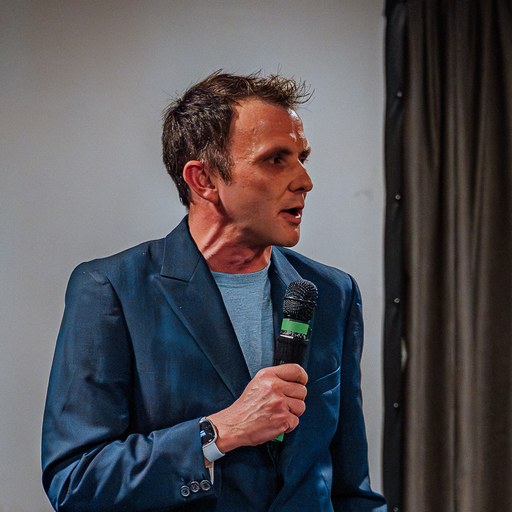
But a few weeks ago, I did something I never thought I'd do—I built my own professional speaking website in about a week. Check it out at roryvsmachines.com. No coding knowledge. Just me, my laptop, and AI tools.
This is vibe coding. And by 2026, it's going to change everything about who gets to build for the web.
What Vibe Coding Actually Means
Let me clear something up first. Vibe coding isn't about websites that respond to your emotions or read your mood. That's not what this is.
Vibe coding is the ability to talk or write a website into existence using AI platforms like Lovable, Replit, or Cursor. You don't need to know a single line of code.
You just use a chatbot interface—similar to ChatGPT, which everyone's familiar with by now. You describe what you want. The AI builds it. The numbers back this up. AI code tools are expected to hit $26.03 billion by 2030, growing at 27.1% annually. And get this—Lovable reached $100M ARR in just 8 months. That might be the fastest-growing startup in history.
This isn't hype. This is happening.
Why I Built My Own Website
I'm the CEO of 21 Degrees Digital. I wanted a website to promote myself as a public speaker.
Normally, I'd brief my web team. We'd go through the whole process. Wireframes. Mockups. Revisions. It would take weeks, maybe months.
Instead, I picked up my laptop after putting the kids to bed around 10pm. I spent a couple of hours each night for about a week. That's it.
The result? A live, professional website at roryvsmachines.com that does exactly what I need it to do.
Even drag-and-drop builders like Wix or Squarespace would have taken me longer. This was faster. More direct. More... mine.
The Process Was Messier Than You'd Think
Here's what nobody tells you about vibe coding: it's not magic.
I started by asking ChatGPT to research speaking websites that actually generate opportunities. It gave me obvious ones—Stephen Bartlett, Gary Vaynerchuk. But it also surfaced sites I'd never heard of.
I went through each one. Dictated back to ChatGPT what I liked and what I didn't. This created a solid brief for Lovable.
I fed that brief into Lovable. It generated something structurally solid. But visually? It looked terrible. Wrong fonts. Wrong colors. It wasn't me.
The Brand Identity Problem
I hit a wall. What actually is my brand?
So I got creative. I took a photo of clothes I wear regularly—dark greens, oranges, reds, some pale blues. I bundled them together, snapped a picture, and fed it into Claude.
Claude generated a complete brand deck for me. Color palette. Font recommendations. Visual identity. Everything.
I took that brand deck back to Lovable with my original prompt. This time? It nailed it. First try. The structure, colors, fonts—all spot on.
I literally said "wow" out loud when I saw it render in front of me.
The Frustrating Parts
Don't get me wrong. There were plenty of frustrations.
I wanted a sticky header that stayed accessible when you scroll. Sounds simple. It wasn't. There was this annoying gap between the header and menu bar that took forever to fix.
Photos were another headache. I'd get them framed perfectly on desktop. Then I'd check mobile and they'd be completely off.
I spent hours iterating on these tiny details. But here's the thing—I could take my time. I could be patient. No developer waiting on me. No hourly rate ticking up.
When it got something wrong, I just told it to try again. When it got something right, I moved forward.
What This Means for Web Design by 2026
Let me be honest about something: building a website was never really about the coding.
Yes, coding is a technical skill. But the hard part? That's always been the planning. The foresight. Understanding which images go where. How pages should flow. What call-to-actions you need. Accessibility considerations.
If you don't know what you're doing, you'll get those things wrong. AI or not.
I spent most of my time tracking down the right photos. Doing research. Making sure brand colors and fonts were consistent. That level of planning and articulation is way harder than the actual build.
The Market Will Split
I can see drag-and-drop builders getting disrupted. As Wix and Squarespace move into the vibe coding space, that bottom end of the market will change fast.
But here's what won't change: 21 Degrees Digital's expertise goes way beyond coding. It's about strategy. Understanding vision. Pulling what's in a client's head and turning it into something that actually works.
What I do see happening: clients coming to us with beta-tested versions of what they want. They'll say "I knocked this together quickly—this is my vision." That makes our job easier. We can see what they're thinking, then use our knowledge to turn it into something truly professional.
The bottom end of the market? Disrupted within three years. The top end—where security, scalability, and professional-grade architecture matter? That'll take longer.
The Security Problem Nobody's Talking About
Here's the uncomfortable truth: AI-generated code introduces security vulnerabilities in 45% of cases, according to Veracode's 2025 report.
This is the Dunning-Kruger effect in action. You know just enough to be dangerous.
If you don't know code, you have no idea if the AI added hundreds of unnecessary lines. You don't know if it left historical security vulnerabilities in place. You don't know what to look for. You don't know how to fix it.
You can't build walls around threats you can't see.
My website? It's a simple brochure site with a contact form. The risk is minimal. Someone could maybe steal a list of people who contacted me for speaking inquiries. Not great, but not catastrophic.
But if I was building an app that handled confidential client data? Financial information? Health records? No way would I use vibe coding for that. Not yet.
I'd want experienced technical teams who understand the risks that come with handling sensitive information.
The Hybrid Future
There was a recent tweet from an Anthropic team leader. He said that over December, every line of code written for Claude—released, added, removed—was actually written by Claude itself.
That's wild. But it points to where we're going.
Tools like Cursor already have tab-completion features. You hit tab, and it guesses the next line of code based on your stack. If it goes wrong, you delete that line and write the next one yourself to redirect it.
This speeds up experienced coders dramatically. They can read whether Cursor is going in the right direction. They can steer it.
By 2026, I think we'll see hybrid models. Half written by AI, half by humans. Especially for anything with high security requirements. Manual human interaction to mitigate concerns.
More Websites or Better Websites?
Both.
When it's easier to build websites, you get more websites. Teenagers starting businesses from their bedrooms. People with ideas who don't need to learn to code first.
There's a podcast I love called The AI Daily Brief. They constantly spin up new initiatives. For their New Year campaign, they created a separate domain with a separate website—even though they already have their main podcast site.
Previously, I would've told them to just add a page to their main site. But this strategy works. They keep their main site focused on the podcast. Their project sites contain specific initiatives without distraction.
It creates a larger footprint across the internet. More domains. More content for LLMs to pick up. According to Gartner, by 2026, 75% of all new applications will be built using low-code technologies. And 80% of low-code users will be business technologists—people outside formal IT departments.
That's not a prediction. That's where we're headed.
How This Changes Agency Work
We'd be naive not to use this with our clients.
If we're getting a poor brief or the client doesn't really know what they want, we can walk them through these steps. Help them create a vision. Even if it's just a home page.
One of the hardest things in web design is pulling the vision out of a client's head. That process can go horribly wrong.
That's why we always give wireframes first. Then a handful of mockup pages before we build a full 50-page website. If we get those initial pages wrong and they see the full site and hate it? We have to rebuild everything.
But if a client can prototype their own vision using vibe coding tools? That gives us a much clearer direction. We can build more accurately. More complex things. Within budget. Without it costing the earth.
What Vibe Coding Can't Replace
Drag-and-drop builders have been around for ages. For the last ten years, it's been easy to build a website. Go into Wix. Spin up a template. Change your name and colors. Done.
That hasn't stopped us from selling websites for £10,000 to £30,000.
Because templates don't give you strategy. They don't give you understanding of your audience. They don't give you architecture that scales or converts.
Vibe coding just makes everyone's life easier. It doesn't replace the thinking. It doesn't replace the expertise.
It means we can build things faster and more accurately. It means clients can articulate their vision better. It means fewer revision cycles and less frustration.
My Prediction for 2026
By 2026, vibe coding will be mainstream. Not experimental. Not niche. Mainstream. The developer shortage supports this. According to Stanford research, employment among software developers aged 22-25 fell nearly 20% between 2022 and 2025. Meanwhile, the US faces a 1.2 million developer shortage by 2026.
This isn't about replacing developers. It's about necessity.
Security will remain the biggest barrier for professional applications. But for brochure sites, portfolios, small business sites? The barrier is already gone.
Anyone with an idea and an evening can now build something real.
That's exciting. That's democratizing. And yeah, that's a little bit scary if you're not paying attention.
But I'm not threatened by it. I'm excited to see what people build when the technical barriers disappear. When the only thing standing between an idea and execution is the quality of your thinking.
Because in the end, that's what always mattered anyway.
More insights

Stay sharp on what works
No fluff. No clickbait. Just content that actually helps.