










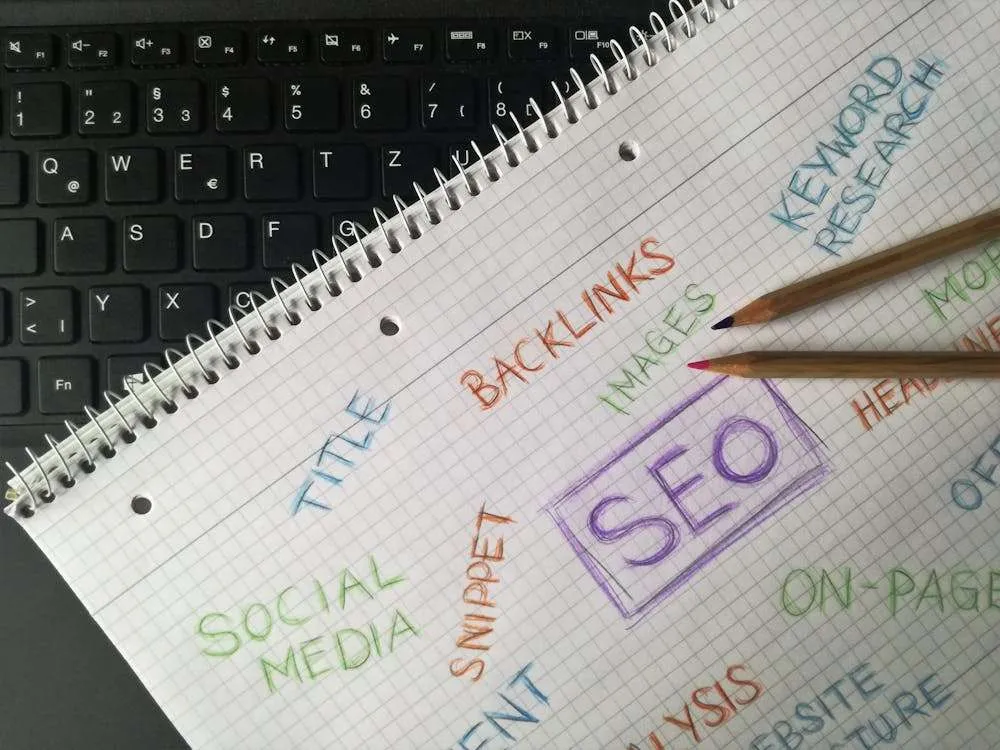
Why AI Search Rewards Old School SEO
Organic search clicks dropped by 54 percent when AI Overviews started appearing at the top of Google results.

Organic search clicks dropped by 54 percent when AI Overviews started appearing at the top of Google results.
People aren't clicking through to websites anymore. They're getting their answers right there in the snippet, or they're skipping Google entirely and asking ChatGPT or Claude directly.
If you've been doing white hat SEO for the last eight years like I have, you shouldn't be worried.
The tactics that worked before still work now. Actually, they work better.
The Marcus Sheridan Principle Still Applies
Remember "They Ask, You Answer"? That approach to content creation hasn't become obsolete.
It's become essential.
The premise is simple: answer every question your customers actually want answered. Put all that information on your website so buyers can make informed decisions before they ever talk to a salesperson.
Since the pandemic, the sales process flipped. Marketing now does 80 percent of the work. Forty percent of customers refuse to talk to a salesperson before making a buying decision.
Your salesperson's job has become: don't mess it up.
AI search engines like ChatGPT scan the web looking for exactly this kind of comprehensive, question-answering content. They reward it with citations and recommendations.
Keywords Haven't Died, They've Evolved
I needed a headset recently. Specifically, one compatible with Dragon Dictate software and featuring a boom microphone.
Two years ago, a Google search would have sent me down a rabbit hole. Amazon would show me "Dragon Dictate approved" headsets that actually had zero compatibility.
I asked ChatGPT instead. It found exactly what I needed in seconds.
Here's the thing: if your product description didn't mention Dragon Dictate compatibility, you wouldn't appear in that search. The broad keywords still matter (headset, boom microphone), but now you need all the detailed information too.
Keyword research remains the fundamental building block. But then you need to think about every possible question someone might ask about that keyword.
It's both traditional SEO and something more granular.
What Actually Works Now
Schema markup has become critical. It helps AI systems understand the semantics of your content.
If you write about a ball, are you talking about a football or a formal dance? Ten years ago, Google couldn't tell the difference. Now, proper markup makes that distinction clear to LLMs.
Brand matters more than ever. Personal brand especially.
AI systems seem to respect individual expertise over corporate messaging. The more you build your personal brand, the more you help your company.
Third-party validation and social proof have become essential. ChatGPT and other LLMs actively look for that external confirmation when deciding what to recommend.
The Human Element Can't Be Faked
I've seen the AI content spam. LinkedIn has become a dumping ground for it.
Google's March update destroyed websites that were churning out a thousand pages a day. Those rankings were artificially inflated garbage.
The whole point of SEO is creating content that's genuinely useful to readers. If you're generating a thousand pages daily as a solo operator, you're not reading any of it. You're not creating value.
AI-generated content can rank well. I've seen it happen.
But it needs a human touch. Someone needs to review it, add their perspective, make it theirs. That human element is what separates content that converts from content that just exists.
The Minimalist Design Problem
Designers love telling me there's "too much copy" on a page. They want to strip everything back for a clean, minimalist look.
That's terrible for AI search.
LLMs need information to work with. When they crawl your site and find sparse content, they can't provide detailed recommendations about your products or services.
You need all the information customers could possibly need easily accessible. Include trust signals, detailed specifications, compatibility information, use cases.
Everything that helps close a sale needs to be there.
Measuring What Matters
Most agencies will tell you a campaign succeeded because of clicks, impressions, or traffic numbers.
I can get anyone ranking number one on Google in a week. That doesn't mean it generates revenue.
Track conversions. Monitor where that traffic comes from.
Bot traffic from LLMs should count as human research. An AI crawling your site is an extension of someone doing their homework before buying.
The volume of conversions and their source tells you if your AI SEO strategy actually works.
Content Is King Again
Ten years ago, everyone said "content is king." Then we got distracted by technical tricks and algorithm hacks.
AI search has brought us full circle.
Quality content that comprehensively answers questions is reclaiming its throne. The difference now is that both humans and AI systems need to find your content valuable.
If you've been doing good SEO all along, you're already positioned to win in this new world. Just keep doing what works, but do more of it.
More insights




Stay sharp on what works
No fluff. No clickbait. Just content that actually helps.